Meca-Quartz vs. Automatic, What's Actually Different
Four of the seven watches in the lineup run a meca-quartz movement — VK63 or VK67. Two run a Miyota 8215 automatic. One runs a Seagull ST1655. If those words don't mean much to you, here's the actual difference, no jargon.
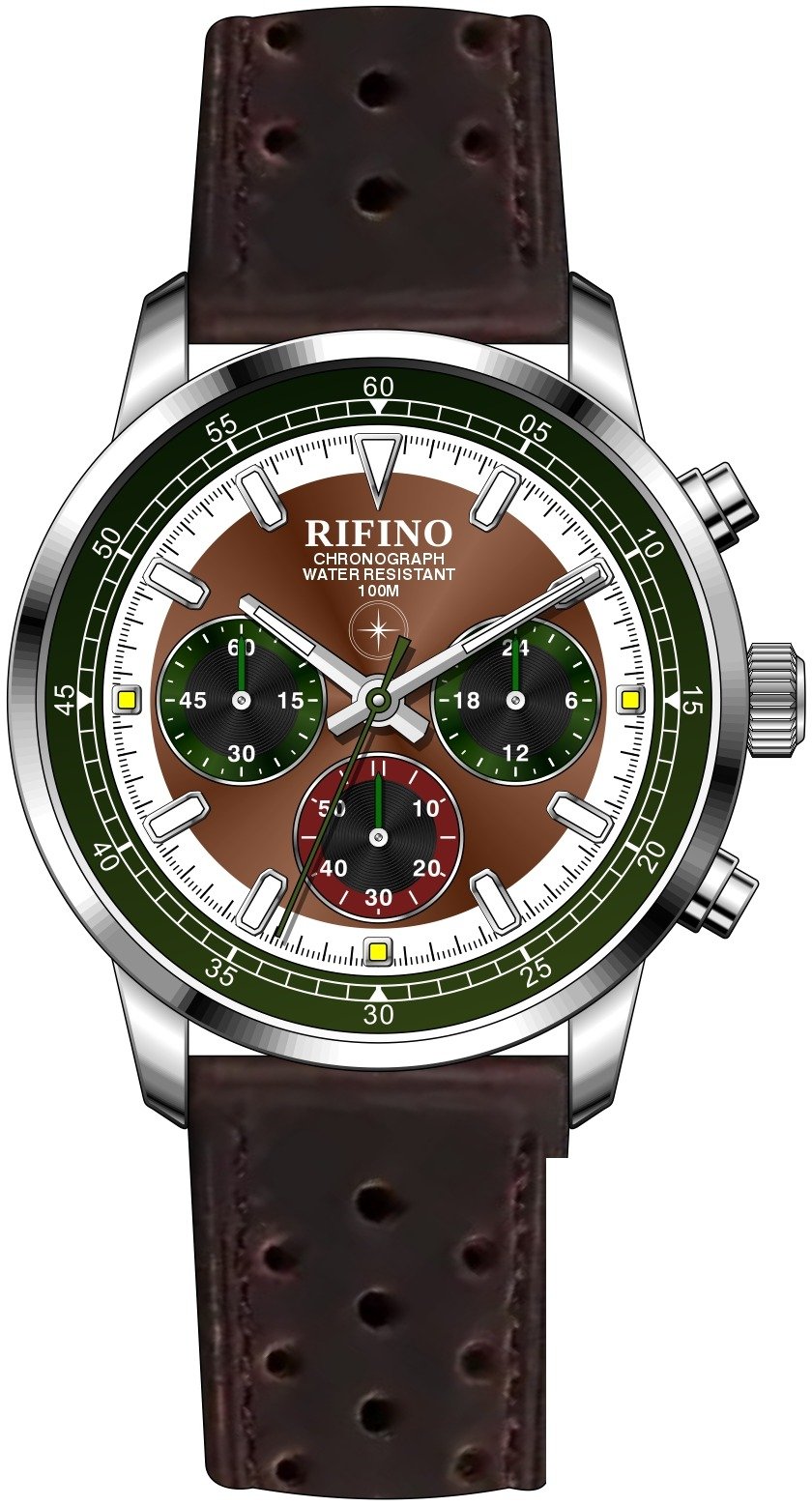
A meca-quartz movement is a hybrid: a quartz movement handles the actual timekeeping (accurate, no winding, battery-powered), but a separate mechanical module drives the chronograph — the stopwatch function, the sweeping second hand, the satisfying click of the pushers. You get quartz reliability with a genuinely mechanical feel where it matters, at a fraction of the cost of a fully mechanical chronograph. That's Rionero, Misano, Lampredi, and Cortina Chrono.
An automatic movement is fully mechanical, no battery at all — a weighted rotor spins when you move your wrist, and that motion winds the mainspring that powers the watch. No chronograph function, but it never needs a battery as long as you wear it regularly, and there's a particular appeal to a machine that runs purely on motion. That's Monopoli and Vieste.
Neither one is “better” — they're built for different things. If you want a chronograph you can actually use, meca-quartz gets you there without automatic-chronograph pricing. If you want the simplest, most self-sufficient mechanical watch, that's what an automatic is for.
— Matt
Get the next build update first.
48 hours of first access before the public. 100 watches per model.